Table of Contents
ToggleWhy Is My Car Shaking? It Might Be an Engine Misfire
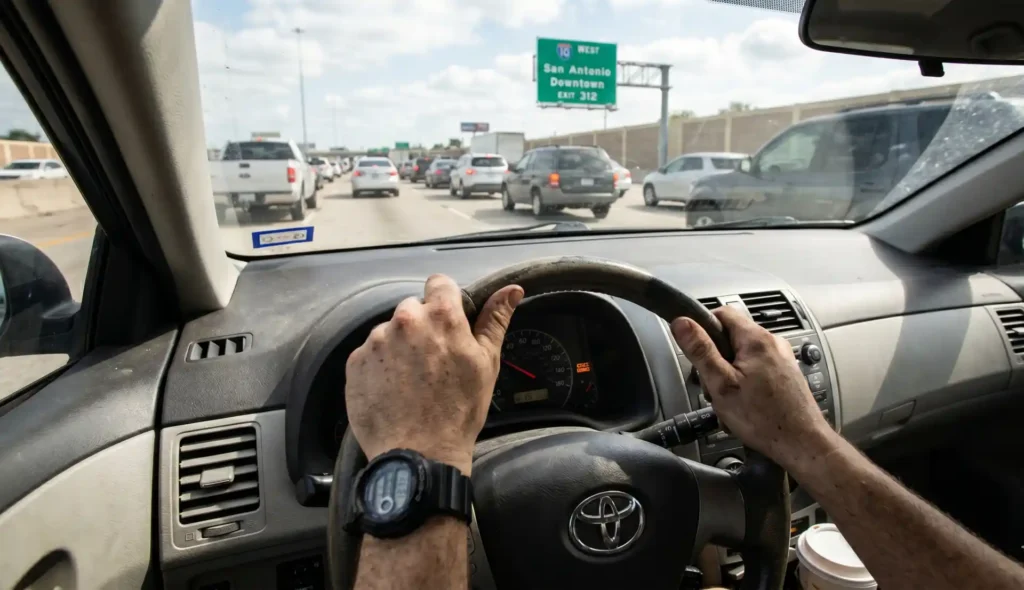
You’re sitting at a red light on I-10, and your car starts shaking like it’s about to fall apart.
Or maybe you noticed it this morning, the second you turned the key, something felt off. A rough vibration. A stumble. A shake you’ve never felt before.
If that sounds familiar, there’s a good chance you’re dealing with an engine misfire. And if you’re driving around Houston, where stop-and-go traffic and brutal summer heat already stress your engine, you don’t want to let this go.
This guide walks you through everything: what a misfire actually is, what causes it, how it makes your car shake, and exactly what to do about it.
What Is an Engine Misfire? (The Simple Version)
Your engine runs by firing a precise mixture of air and fuel inside each cylinder. That controlled explosion is what creates power and keeps your car moving smoothly.
A misfire happens when one or more cylinders fail to ignite that mixture correctly, too late, too weak, or not at all. According to the principles behind the internal combustion engine, every cylinder must fire in a timed sequence. When one breaks that rhythm, your engine immediately loses balance.
The result? Your car shakes. Sometimes violently.
Engine Misfire Car Shaking: Why Does It Happen?
Here’s what most articles skip over: the shaking has a very specific mechanical reason.
When a cylinder misfires, the power stroke that should push the piston down simply doesn’t happen, or happens unevenly. The engine now has an imbalance of force. Think of a washing machine with all the laundry piled to one side. Same idea.
That imbalance travels through the engine mounts, into the frame, and straight into your steering wheel and seat.
The shaking often feels different depending on when it happens:
| Shaking Scenario | What It Usually Means |
| Shaking at idle or when parked | Misfire in one or more cylinders at low RPM |
| Shaking when you accelerate | Misfire under load, fuel, ignition, or compression issue |
| Shaking on a cold start only | Worn spark plugs or a cold-start fuel trim problem |
| Shaking at highway speed | Could be a misfire or a balance/tire issue, needs diagnosis |
| Shaking with the check engine light on | Almost certainly a misfire, scan for codes P0300–P0308 |
8 Common Causes of Engine Misfire and Car Shaking
1. Worn or Fouled Spark Plugs
This is the number one cause, and the most overlooked.
Spark plugs wear down over time. When the gap erodes or the electrode gets fouled with carbon deposits, the spark becomes weak or inconsistent. No good spark means no clean combustion, which means a misfire.
How often should you replace spark plugs?
- Standard copper plugs: every 30,000 miles
- Iridium or platinum plugs: every 60,000–100,000 miles
Houston drivers who do a lot of city driving tend to burn through plugs faster due to constant low-speed stop-and-go cycles.
💡 Pro Tip: If your car has over 80,000 miles and you’ve never changed the spark plugs, start there. It’s the cheapest fix on this list, and it’s often all you need.
2. Bad Ignition Coil
Each spark plug is powered by an ignition coil. When a coil starts failing, it can’t generate enough voltage to fire the plug reliably.
You might notice the misfire comes and goes, especially in heat. Houston summers are genuinely brutal on ignition coils. High temperatures degrade the coil winding insulation over time, which is when intermittent misfires start showing up.
Signs of a bad ignition coil:
- Misfire tied to one specific cylinder (codes P0301, P0302, etc.)
- Rough idle that smooths out slightly at higher RPM
- Noticeable power loss when merging onto highways like US-59 or Beltway 8
3. Clogged or Failing Fuel Injectors
Fuel injectors spray a precise mist of fuel into each cylinder. When an injector gets clogged, from low-quality fuel, long intervals between fuel system cleanings, or simply age, the fuel-air mixture in that cylinder goes lean.
Lean mixture means weak combustion, and weak combustion means a misfire.
Houston’s summer fuel blends (reformulated gasoline required by the EPA for Harris County) can leave more deposits in injectors than drivers expect.
Signs of injector issues:
- Misfire that worsens after filling up at a particular gas station
- Fuel smell from the engine bay
- Noticeably worse fuel economy
4. Vacuum Leaks
Your engine breathes through a network of rubber hoses and gaskets. When any of those develop a crack or gap, unmetered air sneaks into the intake manifold and throws off the air-fuel ratio.
The result is a lean misfire, one that often causes shaking at idle that almost disappears at higher RPM.
Houston’s temperature swings (from 40°F in January to over 100°F in August) crack rubber components faster than most drivers realize. If your car is older than 8 years, vacuum leaks are a real possibility.
⚠️ Common Pitfall: Many drivers replace spark plugs and coils, trying to fix a shaking engine when a simple vacuum leak is the real problem. A quick smoke test at a local shop will catch this in minutes.
5. Low Compression in a Cylinder
This is where things get more serious.
If a cylinder has low compression, caused by worn piston rings, a damaged valve, or a blown head gasket, it physically can’t build enough pressure to combust the air-fuel mixture properly.
Low-compression misfires are harder and more expensive to fix. This is not a plug-and-play repair.
Warning signs it might be compression-related:
- White or blue smoke from the exhaust
- Engine oil consumption between oil changes
- Coolant level dropping with no visible external leak
If you notice any of these in combination with engine misfire and car shaking, get a compression test done right away. Continuing to drive on a blown head gasket in Houston traffic is one of the fastest ways to destroy an engine.
6. EGR Valve Problems
The Exhaust Gas Recirculation (EGR) valve routes a small amount of exhaust gas back into the intake to reduce emissions. When it sticks open or gets clogged with carbon buildup, it disrupts combustion and triggers misfires.
This problem is more common in vehicles with higher mileage, usually 100,000+ miles, and gets misdiagnosed as a fuel or ignition issue surprisingly often.
7. Faulty Oxygen or MAF Sensor
Your engine’s computer relies on sensors to calculate the correct fuel-air mixture. When the oxygen sensor or Mass Air Flow (MAF) sensor sends bad data, the ECU miscalculates, and misfires follow.
The check engine light usually comes on, but the underlying misfire code may point to a sensor problem rather than a mechanical one. This is why a proper diagnostic scan matters more than guessing.
8. Carbon Buildup on Intake Valves (Direct Injection Engines)
If you drive a newer vehicle with a direct injection engine, common in many Toyota, Ford EcoBoost, BMW, and GM models, carbon deposits can accumulate on intake valves over time.
Unlike port injection engines, direct injection doesn’t use fuel flow to wash the valves clean. The result is progressive rough idling, hesitation, and misfires that gradually worsen.
This is becoming a more common issue in Houston, especially for rideshare drivers putting high miles on newer vehicles.
How Misfires Show Up as Shaking in Real-World Driving
If your car shakes when starting, a cold-start misfire is usually the first suspect. This is often a fuel trim issue, worn spark plugs, or a failing crankshaft position sensor. The engine struggles to find its rhythm right out of the gate.
If you’ve been wondering why my car starts shaking when parked, at a stoplight, drive-through, or sitting in your driveway, it’s because the engine is running at its lowest RPM. A misfiring cylinder has its biggest impact at idle, where there’s no momentum to mask the imbalance. Most drivers first notice the problem here.
And if you’ve been asking why my truck shakes when I accelerate, you’re dealing with a misfire under load. Trucks and larger SUVs are especially vulnerable because when you press the accelerator, every cylinder is called upon to deliver. A misfiring one simply can’t keep up, and you’ll feel that as a jerk, stumble, or strong vibration, particularly when merging onto Houston’s highways or climbing overpasses.
What OBD-II Codes Mean for Engine Misfires
If your check engine light is on, an OBD-II scanner will give you a misfire code. Here’s what the codes mean:
| Code | Meaning |
| P0300 | Random or multiple cylinder misfire |
| P0301 | Cylinder 1 misfire |
| P0302 | Cylinder 2 misfire |
| P0303 | Cylinder 3 misfire |
| P0304 | Cylinder 4 misfire |
| P0305–P0308 | Cylinders 5 through 8 |
💡 Pro Tip: Free OBD scans are available at most AutoZone and O’Reilly locations in Houston. But reading the code is just the starting point; a code tells you which cylinder is misfiring, not why. A trained technician still needs to find the root cause.
Is It Safe to Drive with an Engine Misfire in Houston?
Short answer: no, not for long.
Here’s what happens if you keep driving on a misfire:
- Catalytic converter damage: Unburned fuel enters the exhaust and can overheat and destroy your catalytic converter. Replacement typically costs $800–$2,000+ on most vehicles.
- Accelerated engine wear: If the misfire is compression-related, continued driving makes it worse fast.
- Risk of being stranded: A worsening misfire can leave you stuck on 610, I-45, or the Hardy Toll Road.
- Failed Texas state inspection: Harris County requires emissions testing. A misfiring engine with an active check engine light will fail every time.
Step-by-Step: What To Do When Your Car Is Misfiring and Shaking
Step 1: Don’t panic. If the shaking is severe, pull over safely.
Step 2: Check your dashboard. Is the check engine light on? Is it flashing? A flashing CEL means an active, severe misfire; stop driving as soon as it’s safe to do so.
Step 3: Note when the shaking happens. At idle? Under acceleration? Only on cold starts? This information helps your mechanic diagnose faster and saves you money.
Step 4: Check your gas cap. A loose cap can trigger the check engine light and sometimes cause lean misfires. Takes five seconds to rule out.
Step 5: Get a diagnostic scan. Many Houston shops offer free or low-cost diagnostics. Don’t replace parts blindly.
Step 6: Get the repair done. The longer you wait, the more it costs.
Misfire vs. Other Causes of Car Shaking: How To Tell the Difference
Not every shake is a misfire. Here’s a quick reference to help narrow it down:
| Symptom | Likely Cause |
| Shakes only when braking | Warped rotors, consider Brake repair in Sugar Land or your nearest Houston-area shop |
| Shakes at highway speed only | Tire balance or wheel alignment issue |
| Shakes + check engine light | Very likely a misfire |
| Shakes + rough idle + worse fuel economy | Almost certainly a misfire |
| Shakes only on turns | CV axle or wheel bearing |
| Shakes under acceleration + hesitation | Misfire under load, ignition, or fuel delivery |
Houston-Specific Factors That Make Misfires Worse
Living in Houston adds some challenges that drivers in cooler, drier climates don’t deal with:
- Extreme heat degrades rubber vacuum hoses, ignition coil insulation, and fuel injector O-rings faster than in moderate climates.
- High humidity can cause moisture intrusion in ignition components, especially in older vehicles parked outside.
- Reformulated gasoline (required in Harris and surrounding counties) can affect fuel delivery in older, high-mileage engines more than standard fuel blends.
- Constant stop-and-go traffic on I-10, I-45, and the Beltway puts sustained low-RPM stress on the ignition system day after day.
- Texas state inspection includes an emissions check; a misfiring vehicle will not pass.
Common Pitfalls to Avoid
❌ Replacing parts without reading codes first: you might swap all four spark plugs on a P0302 (cylinder 2 only) and still have the same misfire because the coil was the issue.
❌ Ignoring a flashing check engine light: A flashing CEL is your car communicating urgency. Don’t drive further than necessary.
❌ Consistently using cheap fuel: Low-quality gasoline leaves deposits faster, particularly in Houston’s heat.
❌ Skipping scheduled tune-ups: The vast majority of engine misfires are preventable with routine maintenance.
Frequently Asked Questions
Q: Can a misfire go away on its own?
Sometimes an intermittent misfire clears temporarily, but the underlying cause remains. It will return, usually worse than before.
Q: How much does it cost to fix an engine misfire in Houston?
It depends on the root cause. Spark plugs run $100–$300. An ignition coil typically costs $150–$400. Fuel injector cleaning is usually $100–$200. A head gasket repair can reach $1,500–$3,000 or more. Diagnosing early always saves money.
Q: Will my car fail the Texas inspection because of a misfire?
Yes. A misfire triggers the check engine light, and any illuminated CEL is an automatic failure during a Texas state inspection.
Q: Can bad gas cause a misfire?
Yes. Contaminated or extremely low-octane fuel can cause pre-ignition or lean misfires, especially in higher-compression engines. If misfires started right after a fill-up, the fuel source is worth considering.
Q: How long can I drive with a misfire before serious damage occurs?
There’s no safe window. Some misfires cause catalytic converter damage within miles. If you see a flashing check engine light, treat it as an immediate stop situation.
Final Word: Don’t Let a Misfire Turn Into a Major Repair
An engine misfire that makes your car shake is your vehicle telling you something is wrong. Most causes, such as spark plugs, coils, injectors, and vacuum leaks, are straightforward fixes when caught early.
The ones that get expensive are the misfires people ignore for weeks, letting a routine tune-up turn into a catalytic converter replacement or worse, a head gasket job.
If your car is shaking and you’re in the Houston, Texas area, get it checked by a qualified technician who knows the difference between a quick fix and a serious repair, before the road makes that decision for you.