
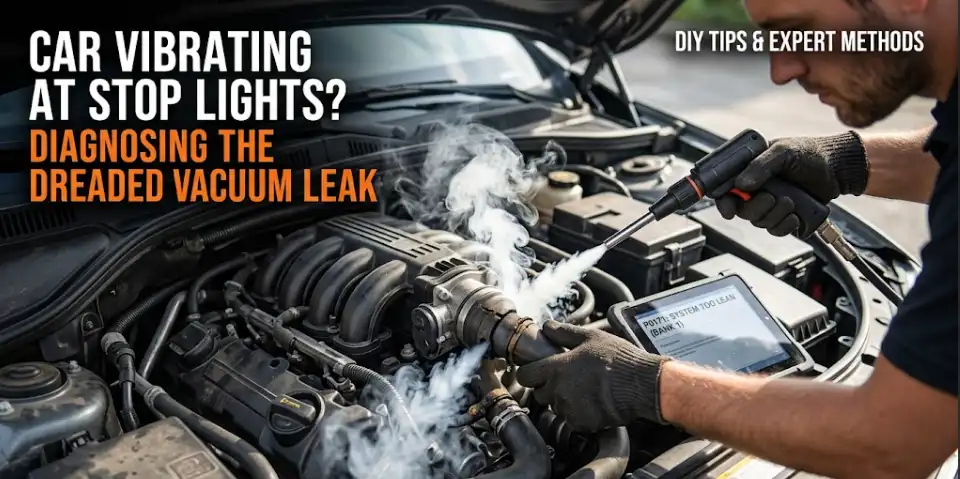
You are sitting at a red light, and suddenly your car starts vibrating. The RPM gauge is bouncing up and down, and the engine feels like it wants to sputter out and die. A few seconds later, the dreaded Check Engine Light pops up on your dashboard.
If this sounds familiar, you might be dealing with an engine vacuum leak.
A vacuum leak in a car is one of those pesky automotive problems that can cause a massive headache. It messes with your car’s air-fuel ratio, destroys your fuel economy, and makes your daily drive incredibly stressful.
The good news is that you do not need to be a master mechanic to figure this out. In this comprehensive guide, we will break down the most common vacuum leak symptoms, show you how to check for vacuum leaks using simple DIY tools, and explain exactly how to fix the issue.
Table of Contents
ToggleWhat is a Car Vacuum Leak?
Before we dive into the warning signs, it helps to understand what a vehicle vacuum leak actually is.
Your car engine acts like a giant air pump. To run smoothly, it needs a precise mixture of fuel and air. The engine control unit (ECU) measures the incoming air using sensors like the Mass Air Flow (MAF) sensor and regulates it via the throttle body.
A vacuum leak occurs when unmetered air enters the engine after the throttle body. Because this extra air bypasses the sensors, the computer does not know it is there. This results in a “lean condition,” meaning there is too much air and not enough fuel in the combustion chamber.
7 Common Vacuum Leak Symptoms to Watch For
How can you tell if you have a vacuum leak? Because an engine vacuum leak messes with the combustion process, your vehicle will start acting up in very specific ways.
If you are wondering “how do you know if you have a vacuum leak,” keep an eye out for these seven common signs of a vacuum leak.
1. Rough or Erratic Idle
This is usually the very first vacuum leak car symptom drivers notice. When your car is parked or stopped at a light, the engine should idle smoothly at a consistent RPM (usually between 600 and 800 RPM). If unmetered air enters the system, the idle will become rough, shaky, and inconsistent.
2. High Engine RPM
Sometimes, a vacuum leak car engine will experience a spike in RPM. Because a vacuum leak introduces extra air, it can mimic the effect of pressing down on the gas pedal. If your engine is racing or idling unusually high while your foot is off the pedal, you likely have an air leak.
3. Engine Stalling and Hesitation
When you press the accelerator, does your car hesitate or feel like it is about to die? A severe intake manifold vacuum leak can lean out the air-fuel mixture so badly that the engine cannot maintain combustion, leading to frequent stalling.
4. Hissing Noises Under the Hood
Since the engine is under high vacuum, an air leak often creates a distinct hissing sound. If you pop the hood while the engine is running and hear a loud whistling or hissing, you are literally hearing the sound of air being sucked through a cracked hose or a failing gasket.
5. The Check Engine Light
Your car’s ECU is constantly monitoring the air-fuel ratio via the oxygen sensors. When it detects too much oxygen in the exhaust, it will trigger the Check Engine Light. The most common diagnostic trouble codes (DTCs) associated with this issue are P0171 and P0174, which stand for “System Too Lean.”
6. Poor Fuel Economy
It might seem counterintuitive that a lean condition (too much air) causes your car to burn more gas. However, when the computer detects the excess air, it tries to compensate by dumping more fuel into the cylinders. This wrecks your gas mileage.
7. Spongy Brake Pedal
In many vehicles, the brake booster relies on engine vacuum to provide braking assistance. If you have a vehicle vacuum leak near the brake booster hose, you might notice that your brake pedal feels incredibly stiff or unusually spongy to press down.
Common Causes: Where Do Vacuum Leaks Happen?
To understand how to locate a vacuum leak, you need to know the usual suspects. Vacuum systems consist of a network of rubber hoses, plastic tubes, and sealing gaskets. Over time, heat and age cause these components to degrade.
- Vacuum Hoses: The small rubber lines that run throughout your engine bay can become brittle, crack, split, or completely pop off their fittings.
- Intake Manifold Gasket: The intake manifold directs the air-fuel mixture into the engine cylinders. If the gasket seals fail, you will experience severe intake manifold vacuum leak symptoms.
- The Intake Boot: The large rubber duct connecting the air filter box to the throttle body can tear, especially in the accordion-like folds.
- PCV Valve and Hoses: The Positive Crankcase Ventilation system is a major source of vacuum. A stuck PCV valve or a cracked PCV hose is a frequent culprit.
How to Check for Vacuum Leaks: 4 DIY Methods
If your vehicle is displaying the classic vacuum leak symptoms, it is time to perform some troubleshooting. If you are wondering how to check for a vacuum leak in car systems or how to check for air leaks in car components, there are several highly effective methods you can try at home.
Here is how to test for vacuum leaks like an expert mechanic.
Method 1: The Visual and Tactile Inspection
Before spending money on tools, use your eyes, ears, and hands. This is the simplest approach for anyone wondering how to find a vacuum leak in car systems.
- Park your vehicle on a level surface, set the parking brake, and pop the hood.
- Start the engine and let it idle.
- Listen closely for any unusual hissing or whistling noises.
- Carefully trace the rubber vacuum lines with your hands. Flex the hoses gently to check for hidden dry rot, cracks, or loose connections.
Method 2: The Soap and Water Spray Technique
If you want to know how to detect a vacuum leak in a car without using flammable chemicals, the soapy water method is incredibly safe and effective.
- Mix a few drops of dish soap with water in a clean spray bottle.
- With the engine idling, gently spray the soapy mixture onto the vacuum hoses, connections, and the intake manifold seams.
- Watch the sprayed areas closely. If you have a leak, the engine vacuum will suck the soapy water into the crack, or you will see the liquid begin to bubble and sputter at the leak site.
[Tip: Focus your spray around the intake manifold gasket seams, as this is a prime location for hidden leaks.]
Method 3: The Carburetor Cleaner / Propane Test
This is a classic method used by DIYers to learn how to diagnose a vacuum leak quickly. It relies on introducing a combustible substance near the suspected leak. When the engine sucks in the chemical, the idle will suddenly change.
Safety Warning: Carburetor cleaner is highly flammable. Do not spray it near hot exhaust components or electrical sparks. Keep a fire extinguisher nearby.
- Start the engine and let it settle into its rough idle.
- Take a can of carburetor cleaner (or an unlit propane torch attached to a small hose) and spray very brief, controlled bursts around the vacuum lines and intake seals.
- Listen to the engine’s RPM. If you spray over a leak, the engine will suck in the fuel, causing the rough idle to instantly smooth out or the RPMs to momentarily rise.
- When the engine reacts, you have found your leak zone.
Method 4: Using a Dedicated Vacuum Leak Detector (Smoke Machine)
If you have tried the methods above and are still asking, “How can I find a vacuum leak?” it is time to use the gold standard: vacuum leak detection via a smoke machine. This is how to find vacuum leaks on an engine when the leak is completely microscopic or hidden underneath components.
You can purchase an affordable automotive vacuum leak detector online, or even build a simple DIY smoke tester using a jar and a bike pump.
- Ensure the vehicle engine is completely turned off.
- Connect the hose of your smoke machine to a main vacuum port, such as the brake booster vacuum line or the intake boot.
- Turn on the smoke machine to pump dense, pressurized smoke into the sealed engine intake system.
- Grab a flashlight and inspect the engine bay. Look for where the white smoke begins to drift or billow out. Wherever smoke escapes is exactly where your leak is located.
Vacuum Leak Diagnostic Summary
To help you choose the best testing approach for your skill level, here is a quick comparison of the diagnostic methods:
| Method | Skill Level | Tools Required | Safety Level | Best For |
| Visual & Audio | Beginner | Flashlight, Hands | Very High | Large, obvious cracks and loose hoses |
| Soapy Water | Beginner | Spray bottle, Dish soap | Very High | Accessible hoses and fittings |
| Carb Cleaner | Intermediate | Carburetor cleaner spray | Medium | Intake manifold gaskets and connections |
| Smoke Machine | Advanced | Smoke tester machine | High | Micro-cracks and hidden or deep leaks |
How to Fix a Vacuum Leak in a Car
Once you have successfully completed your vacuum leak detection and isolated the problem spot, it is time to execute the repair. How you choose to fix a vacuum leak will depend entirely on which part failed.
Fixing a Broken Vacuum Hose
If the culprit is a cracked or damaged rubber line, this is the easiest repair vacuum leak job you can face.
- Disconnect the broken hose from its fittings.
- Take the damaged hose to your local auto parts store to ensure you purchase a replacement hose with the exact same inner and outer diameter.
- Cut the new hose to the correct length using a sharp razor blade.
- Push the new hose firmly onto the fittings. If the original hose used clamps, make sure to reinstall them to guarantee an airtight seal.
Intake Manifold Vacuum Leak Repair
If your diagnostic testing revealed that your intake manifold gasket is leaking, the repair process is significantly more involved. This job requires a moderate amount of mechanical experience.
- Disconnect the negative battery terminal for safety.
- Remove the components blocking access to the intake manifold, such as the air intake duct, electrical connectors, fuel lines, and throttle linkages.
- Unbolt the intake manifold carefully, following the manufacturer’s specified removal sequence to prevent warping the metal.
- Lift the manifold off and scrape away every bit of the old, degraded gasket material from the engine block and manifold surfaces. Be careful not to drop debris into the engine ports.
- Wipe the surfaces clean with brake cleaner.
- Position the brand-new intake manifold gasket into place.
- Reinstall the intake manifold and use a torque wrench to tighten the bolts to the exact factory specifications using the correct torque sequence.
- Reassemble all disconnected hoses, wires, and intake pieces.
The Risks of Ignoring an Engine Vacuum Leak
It can be tempting to ignore a minor rough idle, especially if your car still manages to get you from point A to point B. However, driving with a vehicle with a vacuum leak for an extended period can lead to severe, expensive secondary damage.
Damage to the Catalytic Converter
When your car suffers from a vacuum leak, the ECU dumps extra fuel into the cylinders to combat the lean condition. Not all of this excess fuel burns completely during combustion. The unburnt fuel travels down your exhaust pipe and raw fuel melts the delicate internal structure of your catalytic converter, turning a cheap hose repair into a multi-thousand-dollar exhaust replacement.
Engine Overheating and Valve Damage
Lean air-fuel mixtures burn significantly hotter than properly balanced mixtures. Over time, these elevated combustion temperatures can cause your engine to overheat, warp cylinder heads, or burn out your exhaust valves.
Conclusion: Take Control of Your Engine’s Performance
Experiencing vacuum leak symptoms can be frustrating, but identifying and fixing the issue does not have to be overwhelming. By understanding how to tell if you have a vacuum leak (such as a rough idle, high RPMs, or a hissing sound under the hood) you can catch the problem before it causes catastrophic engine damage.
Whether you choose to locate the issue using a simple spray bottle of soapy water or a professional vacuum leak detector or smoke machine, tracking down the leak saves you money and restores your car’s smooth performance.
If you suspect your car has an air leak, do not wait for the problem to get worse. Pop your hood today, check those lines, and get your vehicle running smoothly again.
Have you successfully tracked down an engine vacuum leak using one of these DIY methods? Let us know your tips and tricks in the comments below, or share this guide with a friend who is trying to solve a stubborn, rough idle!