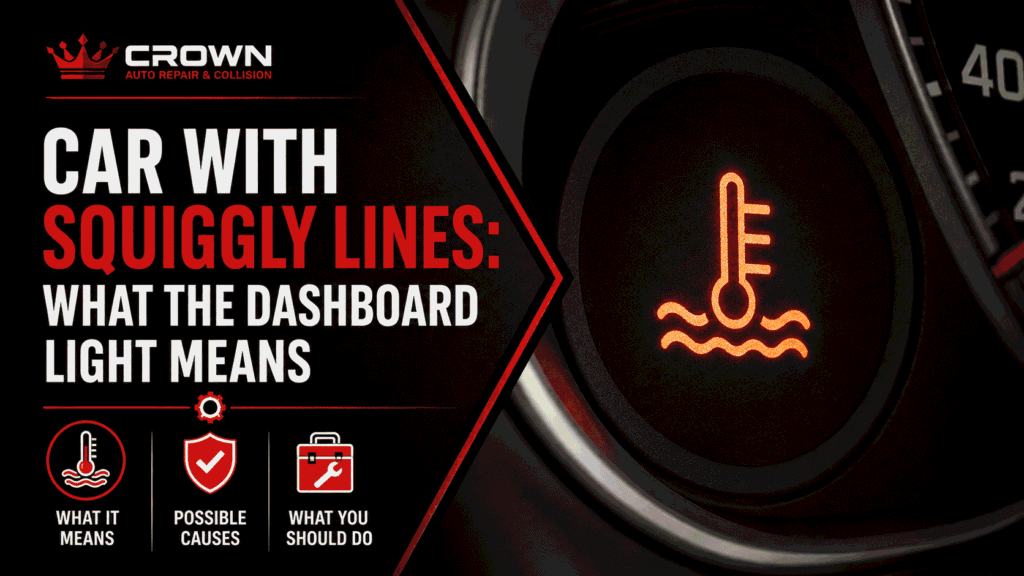
The car with squiggly lines sign is usually the traction control or electronic stability control indicator on your dashboard. It is different from a roadside warning sign showing a skidding car, although both are associated with slippery conditions. The dashboard light tells you that your vehicle’s traction/stability system is active or, if it stays illuminated, that the system may have detected a fault.
Quick answer: If the light is flashing while you accelerate on a wet, loose, or slippery surface, the system is typically working to reduce wheel slip. If it stays on when road conditions are normal, check whether traction control was switched off and consult your owner’s manual. A persistent warning especially when accompanied by an ABS or stability-control warning should be diagnosed promptly.
The car with squiggly lines sign is commonly known as the traction control light. It indicates that your vehicle’s traction control system is active. This system helps prevent wheel spin on slippery surfaces. When you see this light, it means your car is working to maintain traction. This is especially important in adverse weather conditions. The system uses sensors to monitor wheel speed and adjust braking.
Table of Contents
ToggleWhat the Squiggly Lines Light Means at a Glance
Use this quick guide to understand the most common situations:
- Flashing while accelerating: Traction control is usually detecting and managing wheel slip.
- Solid on during normal driving: The system may be switched off or may have detected a fault.
- Flashing with slippery roads: Slow down and use smooth steering, braking, and acceleration.
- Solid with ABS or stability warning: Arrange a diagnostic inspection promptly.
A flashing light means the system is actively working. A steady light might indicate a malfunction. It’s important to know what certain lights mean on the dashboard. Ignoring the traction control light can compromise your safety. It can also lead to costly repairs. Understanding the meanings of dash lights can prevent these issues.
The traction control system is part of your vehicle’s stability control. It enhances handling and safety, especially in inclement weather. Knowing how to respond to this light is crucial. If the light remains on, a diagnostic check may be needed. A professional mechanic can help identify the issue. Regular maintenance can prevent dashboard warning lights from appearing.
The car with squiggly lines road sign also indicates slippery conditions. Drivers should reduce speed and drive cautiously. This sign is a warning to adjust your driving. The traction control system can be manually turned off in some vehicles. This is useful for specific driving conditions. However, it’s generally best to keep it on for safety. Understanding car dashboard symbols is vital for safe driving. It helps you respond appropriately to different situations. This knowledge can improve your driving experience.
In this guide, we’ll explore the meaning of the car with squiggly lines sign. We’ll also discuss how to respond to it effectively. Stay informed to ensure your safety on the road.
What Does the Car With Squiggly Lines Light Mean?
Traction Control Light: Flashing vs. Solid
The squiggly line symbol can be mystifying at first glance. This icon is a crucial part of a vehicle’s warning system. It often signals something about traction control or road conditions.
When you encounter this symbol, remember it’s not just decorative. It is designed to convey important driving information. It assists drivers by alerting them to potential problems.
In most cars, this symbol’s primary purpose is to indicate the activation of the traction control system. It’s an alert that the system is striving to maintain grip. This is particularly useful in adverse weather or on slippery terrain.
Here’s a brief overview of what this symbol might represent:
- Traction Control Activation: Indicates that the vehicle’s traction control system is engaged.
- Slippery Road Conditions: Alerts drivers to possible loss of grip on the road.
- System Check Prompt: It can sometimes suggest a need to check the traction control system.
The symbol is typically yellow or amber. This color scheme signifies caution. It’s an invitation for the driver to pay close attention. But what should you do if this sign appears while driving? Firstly, remain calm. Often, it’s a standard part of your vehicle’s dynamics, especially in challenging conditions.
Sometimes, the symbol might flash. Flashing usually means the traction control system is actively working. It is adjusting to keep the vehicle stable. A solid light might mean something more serious. This may suggest a fault within the traction control system. In such cases, further investigation is warranted.
It’s advisable to consult your vehicle’s manual for clarity. Each car model can have variations in its dashboard symbols. Understanding your vehicle’s dashboard is crucial for safety. Ignoring dashboard symbols can lead to wear and tear. It may also reduce fuel efficiency and impact vehicle handling. Knowing what the light on my dashboard means is key to effective car maintenance.
In summary, the squiggly line symbol is pivotal in your car’s dashboard signals. Understanding its meaning helps in maintaining control and safety.
Relevance to Traction Control
Traction control is a fundamental safety feature in modern vehicles. The squiggly lines symbol directly relates to this system. It informs the driver about the system’s status. This system is crucial for preventing wheel spin. It plays a vital role when driving on slippery surfaces. It helps maintain your car’s grip, enhancing stability and safety.
The traction control system is integrated into many aspects of your vehicle. It works in conjunction with other systems, such as anti-lock brakes. Understanding its functions can greatly improve your driving safety.
How Traction Control Responds to Wheel Slip
When a wheel begins to spin faster than expected, the vehicle can reduce engine power, apply braking to an individual wheel, or use both strategies. The exact response depends on the vehicle. In everyday driving, the goal is to help the tires maintain useful contact with the road.
Here’s a breakdown of what traction control does:
- Monitors Wheel Speed: Uses sensors to keep track of wheel speed and apply brakes as needed.
- Prevents Wheel Spin: Engages when it detects possible wheel spin on slippery surfaces.
- Enhances Vehicle Stability: Works with other systems to keep the vehicle under control.
The role of traction control becomes even more critical in inclement weather. Rain, snow, and ice can significantly affect road conditions. The system is designed to counteract these challenges.
Knowing when to expect the traction control light is helpful. The light might trigger in wet conditions or when accelerating quickly. It’s a sign that the system is in action. A steady light often indicates a system issue. If the light stays on, your vehicle might need diagnostics. A professional mechanic can pinpoint any specific issues.
Some drivers disable traction control for performance or off-road driving. This should only be done when absolutely necessary. It’s important to understand the consequences of turning it off.
Regular vehicle inspections are vital for ensuring traction control efficiency. Worn-out tires or low tire pressure can affect the system’s performance. Routine checks help in detecting potential problems early.
In essence, traction control supports vehicle stability. It helps prevent skidding or loss of control. And understanding how it works can lead to safer driving choices.
Why Is the Traction Control Light On?
Common Causes of a Traction Control Warning
When a car with squiggly lines light comes on, the exact cause depends on the vehicle. The most common possibilities include:
- Wheel-speed sensor problem: The traction and stability systems use wheel-speed information to detect wheel slip.
- ABS or stability-control fault: Because these systems share information and components, an ABS warning may appear alongside the squiggly-car light.
- Tire-related issue: Uneven tire wear, incorrect tire pressure, or mismatched tire sizes can affect traction-system operation.
- Steering-angle sensor issue: The stability-control system needs accurate steering information to determine the driver’s intended direction.
- Traction control switched off: Some vehicles allow the driver to disable traction control, which can illuminate a related indicator.
- Temporary wheel slip: On wet pavement, gravel, mud, or snow, a flashing light can simply mean the system is actively working.
Do not assume every dashboard light with a car and squiggly lines means the same thing on every make and model. The owner’s manual is the final reference for your vehicle’s specific symbol and behavior.
- Check Engine Light: This light, often amber, indicates engine-related issues. Ignoring it can lead to severe damage. It’s vital to diagnose and address it promptly.
- Battery Warning Light: This light signifies issues with your car’s charging system. It might point to a problem with the alternator or battery. Prompt attention is necessary to avoid breakdowns.
- Oil Pressure Warning Light: Depicted as an oil can, it alerts you to low oil pressure. This could mean low oil levels or a faulty oil pump. Addressing it quickly can prevent engine damage.
- Brake Warning Light: This light could mean your handbrake is engaged. It can also signify issues within the braking system. It’s crucial to ensure brakes are functioning well for safety.
- Temperature Warning Light: When this light appears, your engine is overheating. It could be due to low coolant levels or a malfunctioning thermostat. Immediate action is necessary to prevent engine overheating.
Each of these lights has a distinct meaning. Some indicate minor issues, while others could denote serious problems. Understanding what certain lights mean on the dashboard can save you from potential hazards.
Car With Squiggly Lines vs. the Road Sign
People often search for car with squiggly lines road sign meaning because the dashboard symbol and roadside sign look similar. They are related, but they are not the same warning.
| Symbol | What it means | What to do |
|---|---|---|
| Dashboard car with squiggly lines | Traction control/stability-control status or fault | Drive appropriately; diagnose a persistent warning |
| Road sign with car and squiggly lines | Slippery-road or reduced-traction warning | Reduce speed and drive cautiously |
A roadside car with wavy lines symbol is therefore a driving-condition warning. A car symbol with squiggly lines illuminated on your instrument panel is a vehicle-system indicator.
Other dashboard symbols might include:
- ABS Light: Signaling an issue with the anti-lock braking system.
- Airbag Indicator: Suggesting a potential airbag malfunction.
- Tire Pressure Warning: Alerting to low tire pressure, affecting ride quality and fuel efficiency.
- Fuel Indicator Light: A reminder that your fuel level is low, urging a refill soon.
- Traction Control Light: The squiggly lines symbol indicates active traction control.
Understanding the implications of these lights encourages proactive measures. It could mean consulting the car manual or seeking professional help. Furthermore, being informed about these symbols helps in maintaining the car’s condition. Ignoring dashboard lights can lead to increased wear and tear and costly repairs.
Technological advancements have introduced complex dashboard symbols. In modern vehicles, new icons represent specialized features. Regularly updating knowledge about these lights is advisable. Dashboard lights act as your car’s language. They communicate the need for immediate attention or routine checks. Knowing these signs fosters responsible driving and vehicle longevity.
When a Warning Light Needs More Attention
For example, a persistent traction-control warning on a dry road is more concerning than a brief flash while the tires are slipping. Likewise, if the vehicle feels unstable, the steering feels unusual, or other warning lights appear, avoid treating the symbol as a minor reminder. Instead, have the vehicle checked so the underlying problem can be identified.
In summary, dashboard lights are more than symbols. They are crucial indicators of your car’s health. Being alert to them ensures smooth and safe driving experiences.
When Should You Have the System Diagnosed?
Car symbols form an integral part of vehicle operation. Recognizing them is key to effective car maintenance and safer driving. These icons vary in form and function, depending on the vehicle’s make and model.
Knowing car symbols is part of being an informed driver. It helps in understanding the vehicle’s immediate needs. This knowledge equips drivers to respond swiftly to any issues.
Here’s a list highlighting why understanding car symbols is crucial:
- Enhances Safety: Recognizing symbols can prevent accidents by alerting you to immediate problems.
- Prevents Damage: Timely responses to dashboard lights can mitigate potential damage, saving money on repairs.
- Increases Vehicle Longevity: Regular maintenance based on dashboard alerts can prolong your car’s lifespan.
- Improves Efficiency: Addresses minor issues before they escalate, maintaining optimal vehicle performance.
- Builds Driver Confidence: Familiarity with dashboard lights reinforces assurance in managing unexpected situations.
Not all car owners pay attention to these symbols, yet they are crucial. Some drivers may dismiss them until the vehicle shows symptoms. Waiting can result in more significant issues or vehicle failure. Knowing what does check engine mean in a car is a start. It prepares you to seek necessary help without delay. Such immediate action is vital for sustaining vehicle performance.
Driver’s manuals are valuable resources for dashboard information. They offer insights into symbol meanings and recommended actions. Regular consultation aids in staying informed about your car’s features. For new car owners, getting familiar with symbols is vital. Knowledge of car dashboard symbols pays off in the long run. It ensures your vehicle stays in prime condition.
Technology integration in cars adds complexity to the dashboard. Digital symbols may include maintenance reminders or service alerts. It’s advisable to stay updated with these technological advancements.
In summary, understanding car symbols is more than recognizing icons. It’s about appreciating their role in vehicle safety and efficiency. By staying informed, you contribute to your car’s optimal performance and reliable functioning.
What to Do When the Squiggly Lines Light Comes On
Immediate Steps for Drivers
Seeing the car with squiggly lines sign on your dashboard can be concerning. It’s important to stay calm and know what steps to take. This light represents your vehicle’s traction control system in action.
Firstly, assess the driving conditions. This warning light often comes on in slippery conditions, such as rain, ice, or snow. It’s crucial to adapt your driving style to these conditions. Immediately reduce speed and avoid abrupt maneuvers. Sudden movements can cause loss of traction, making the situation worse. Gentle steering and braking help maintain control.
If the light flashes, it indicates that the traction control system is actively engaging. This is typically normal under adverse conditions. Continue driving with caution, and keep an eye on the road.
However, if the light remains steady, it might signal a problem. It could be a malfunction or a system disablement. Check if you accidentally turned off the traction control system; some vehicles have a manual switch.
Here are immediate steps if the light stays on:
- Check for Manual Deactivation: Some cars allow you to switch off traction control manually.
- Inspect Tire Conditions: Ensure your tires are properly inflated and in good condition to maintain traction.
- Look for Obstructions: Sometimes ice or debris near the tires can trigger the light.
If the light persists even in regular conditions, consult your car’s manual. It might suggest further actions or direct you to a professional. Generally, it’s good practice to let a mechanic assess any ongoing issues. Using an OBD-II scanner can also be helpful for diagnostics, but a code should be interpreted alongside the vehicle’s symptoms and other test results.
If the vehicle also has a vibration, wobble, uneven tire wear, or steering problem, the underlying issue may involve tires, wheels, alignment, or suspension. You can also read our guides on wheel alignment costs and why wheels wobble side to side.
In case you’re unfamiliar with using diagnostic tools, seek assistance. A skilled technician can provide a more detailed evaluation. They will ensure the system is functioning correctly.
🚗 Squiggly-Car Light Staying On?
Don’t guess at a warning that can affect traction or stability. Crown Auto Repair & Collision in Sugar Land can inspect the vehicle, check related systems, and help identify the cause.
Get vehicle diagnostics or contact Crown Auto Repair & Collision to schedule service.
Long-term Solutions for Vehicle Stability
Understanding the car with squiggly lines sign and addressing it is critical for vehicle stability. This involves more than immediate fixes; long-term strategies enhance your driving safety.
Routine maintenance is pivotal for maintaining traction system effectiveness. Regular checks help identify and fix issues before they turn into problems. This preventive approach protects your car and ensures reliable performance.
Tires play a significant role in vehicle stability. Worn tires can compromise traction, especially in adverse conditions. If you notice shaking, vibration, or uneven wear, our guide on how bad tires can make a car shake may help you understand the warning signs. Regularly inspect tire wear and pressure, replacing tires when necessary.
Consider these long-term maintenance strategies:
- Tire Maintenance: Rotate and balance tires to distribute wear evenly and maintain optimal contact with the road.
- Brake System Service: Regular checks ensure the anti-lock braking system (ABS) works in tandem with the traction control system.
- Sensor Calibration: Properly functioning sensors are crucial for accurate traction system operation. Regular diagnostics can calibrate these sensors.
Understanding what does the car with lines mean equips you for proactive measures. Besides tire care, ensure that all related systems are functioning harmoniously. This includes engine, brakes, and suspension systems. A smooth suspension system supports vehicle stability, especially on uneven roads. Regular checks ensure the suspension absorbs shocks effectively, keeping the tires grounded.
Driving habits also influence long-term stability. Smooth, gradual accelerations and decelerations reduce wear on traction-related components. Maintaining a safe speed helps in controlling the car during inclement weather. Adapting these habits reduces stress on the traction control system. It also contributes to better fuel efficiency, as it promotes smoother engine performance.
Finally, always use quality replacement parts if repairs or upgrades are necessary. Genuine parts ensure compatibility and preserve the system’s integrity. Quality maintenance guarantees your vehicle remains stable and safe under various conditions.
Driving Safely When Traction Is Reduced
How Rain, Snow, Ice, and Loose Roads Affect Traction
Inclement weather can significantly impact traction control, creating challenging driving conditions. Rain, snow, and ice particularly test your vehicle’s traction capabilities. Understanding how these conditions affect traction is essential for safe driving.
When roads become wet, traction decreases. Water creates a layer between the tires and pavement, leading to potential hydroplaning. The traction control system activates to counter this effect, maintaining grip. Snow and ice further reduce traction by forming slick layers over roads. On icy surfaces, even slight accelerations might cause wheels to spin. The traction control system helps by modulating power to the wheels.
Strong winds, another form of inclement weather, can affect vehicle stability. While not directly impacting traction, winds can push cars sideways. The electronic stability control works with traction control to keep the vehicle on course.
Consider these impacts on traction control:
- Rain: Reduces friction between tires and road.
- Snow and Ice: Create slippery surfaces that challenge tire grip.
- Strong Winds: Affect stability, working alongside traction control.
Foggy weather limits visibility, indirectly impacting traction by complicating quick responses. Without clear sight lines, predicting road conditions becomes challenging. Traction control aids as the driver navigates these unpredictable environments.
Mud and loose gravel roads also challenge traction capabilities. The traction control system detects wheel spin, adjusting power distribution. This is crucial for maintaining control on uneven or unstable surfaces. Extreme temperatures, either hot or cold, can alter tire pressure and performance. Properly inflated tires are vital for maintaining traction. Check tire pressure regularly, as fluctuations occur more often in extreme conditions.
Adverse weather conditions demand more from the traction control system. Understanding its role during these times boosts driving safety. With this awareness, you can better prepare for the dynamic challenges of inclement weather.
Best Practices for Safe Driving
Driving safely during inclement weather requires preparation and adaptation. Implementing best practices ensures your safety and optimizes traction control performance. Adjusting your approach to driving conditions is key.
First, slow down. Reduced speed gives more time to react to sudden changes or obstacles. It improves tire grip and reduces the risk of skidding. Increasing the following distance is vital. In poor weather, stopping distances increase. Leaving more space between cars allows for safer braking.
Here are some best practices:
- Reduce Speed: Slower speeds enhance control.
- Increase Following Distance: More space allows for safer stops.
- Avoid Sudden Movements: Gentle maneuvers maintain traction.
Check tire condition regularly. Quality tires with good tread perform better in bad weather. They reduce the likelihood of hydroplaning or sliding. Proper inflation also improves grip and efficiency.
Visibility is another critical factor. Ensure your windshield wipers function properly. In rain or snow, clear visibility is crucial for reacting promptly to road changes. Keep headlights and tail lights clean for better visibility by others. This prevents accidents in low-light conditions like fog and heavy rain.
Avoid cruise control on slippery roads. Manually controlling speed helps in applying necessary adjustments quickly. This proactive approach aids traction control mechanisms by reducing the need for abrupt interventions. Focus on gentle steering and braking. Abrupt actions might disengage traction and cause skidding. The traction control system works best when changes are gradual.
Here are habits to form:
- Maintain Clear Vision: Ensure wipers and lights are functional.
- Avoid Cruise Control: Manual control improves responsiveness.
- Smooth Maneuvers: Gradual movements help the traction control system.
Finally, regular vehicle maintenance is essential. Keep the car’s systems in optimal condition to handle tough conditions. Check fluid levels, including those of brakes and washers, to avoid unnecessary failures during adverse weather.
By integrating these best practices, you enhance your safety on the road. Understanding and utilizing the traction control system effectively can prevent accidents. Stay aware and prepared to face inclement weather with confidence.
Car With Squiggly Lines Sign: Key Takeaways
Most importantly, don’t panic when this symbol appears. A flashing traction-control light can simply mean the system is responding to wheel slip. A light that remains on in normal driving deserves more attention because it may indicate a fault or that the system has been switched off.
Frequently Asked Questions About the Car With Squiggly Lines
What does the car with squiggly lines mean?
The car with squiggly lines is usually the traction control or electronic stability control warning symbol. A flashing light commonly means the system is actively responding to wheel slip. A light that stays on may indicate that the system is switched off or has detected a fault.
What does the car with squiggly lines on the dashboard mean?
When this car icon with squiggly lines appears on the dashboard, your vehicle is communicating the status of its traction or stability-control system. The exact meaning can vary by make and model, so check the owner’s manual if the light remains illuminated.
Why is my car with squiggly lines light on?
If the light is on while driving on a slippery surface, traction control may be working normally. If it remains on during normal, dry-road driving, possible causes include a wheel-speed sensor problem, tire-related issue, steering or stability-system fault, or manually disabled traction control.
Can I drive with the car with squiggly lines light on?
If it flashes briefly during wheel slip and the vehicle is behaving normally, slow down and drive smoothly. If the light stays on, the vehicle may still drive, but traction or stability assistance may not be fully available. Have the warning diagnosed if it persists, especially if other warning lights appear.
What does the car with squiggly lines road sign mean?
A roadside sign showing a car with wavy or squiggly lines generally warns that the road ahead may be slippery. It is different from the dashboard traction-control light. When you see the road sign, reduce speed, increase following distance, and avoid sudden steering, braking, or acceleration.
What is the difference between a flashing and solid squiggly line car light?
A flashing traction-control or stability-control light generally indicates that the system is actively working to manage wheel slip or vehicle stability. A continuously illuminated light can indicate a fault or that the system has been turned off. Because symbols vary by vehicle, use your owner’s manual for model-specific information.
Where can I get a car with squiggly lines light diagnosed in Sugar Land?
If the warning stays on or you are unsure why it appeared, a professional diagnostic inspection can identify the underlying fault. Crown Auto Repair & Collision’s diagnostic service can help identify warning-light and vehicle-system problems so you know what needs attention.
Understanding the car with squiggly lines sign is crucial for safe driving. It signals that the traction control system is active, ensuring stability in adverse conditions. Knowing how this system works can significantly improve driver confidence and safety.
Here are the key takeaways:
- Recognize the Sign: It’s crucial for interpreting the squiggly lines as traction-related.
- Assess the Situation: Slow down and adjust driving techniques accordingly.
- Consult Professionals: Persistent dashboard lights require a mechanic’s insight.
- Maintain Awareness: Familiarize yourself with all dashboard symbols for effective responses.
- Check Tire and Brake Conditions: These components are vital for optimal traction control performance.
Being proactive with these points ensures that you can handle unexpected road conditions efficiently. The traction control system is a powerful tool in your vehicle’s safety arsenal. By incorporating these practices, you contribute to the longevity and reliability of your car.
Importance of Vehicle Maintenance
Regular vehicle maintenance is essential for avoiding unexpected breakdowns and maximizing safety. This practice ensures all systems, including the traction control, operate effectively. Frequent checks can prevent minor issues from evolving into costly repairs.
Here’s how maintenance plays a role:
- Routine Inspections: Regular check-ups by professionals help keep systems in peak condition.
- Fluids and Components: Ensure brake fluids and other crucial components are at optimal levels.
- Tire Health: Well-maintained tires support traction control and overall vehicle efficiency.
By sticking to a maintenance schedule, you enhance the vehicle’s reliability. This preparation aids in safe navigation through different driving conditions. Good maintenance not only extends vehicle life but also boosts performance on the road, ensuring you are prepared for any challenge the road throws at you.