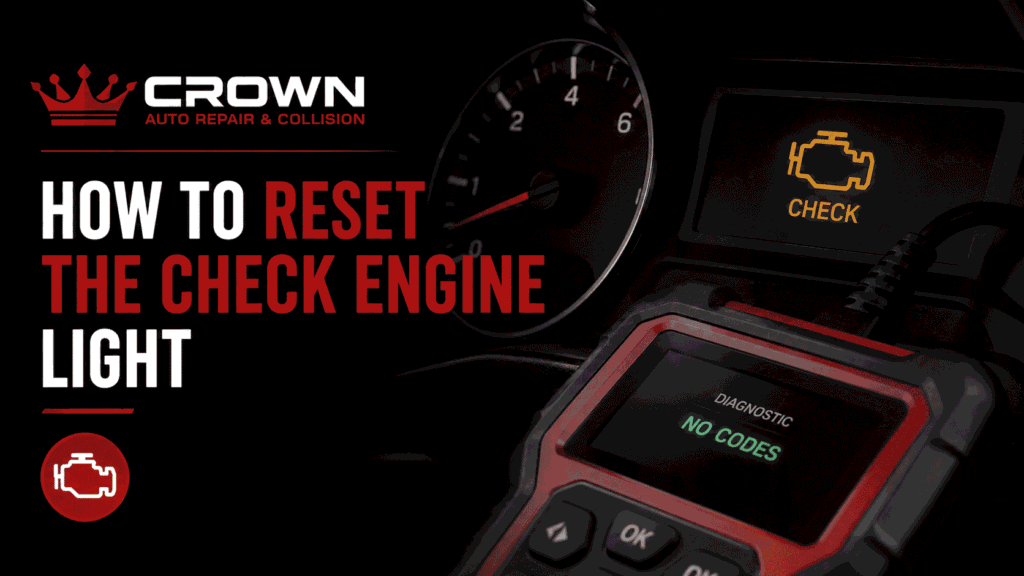
You’re driving down Highway 6, coffee in the cup holder, running late for work and there it is. That little orange engine glowing on your dash. Your stomach drops a little. Is it serious? Is your car about to break down in the middle of Sugar Land traffic? Or is it nothing at all?
Take a breath. You’re not alone, and this is fixable.
Every week, drivers across Sugar Land, Houston, and the rest of Texas pull into repair shops asking the exact same question: how to reset the check engine light so it stops staring back at them every time they start the car. The good news is that resetting it is usually simple. The more important question, the one this guide will actually answer honestly, is whether you should reset it before you know what’s causing it in the first place.
This guide walks you through what the light means, the most common causes we see here in Texas heat and traffic, several ways to reset the check engine light yourself, and when it’s time to stop guessing and let a professional pull the real code. By the end, you’ll know exactly what to do next.
What Does the Check Engine Light Actually Mean?
Your car’s computer mechanics call it the ECU, or engine control unit is constantly watching dozens of sensors. Oxygen levels in the exhaust, engine temperature, fuel mixture, transmission behavior, emissions performance. The moment one of those readings falls outside a safe range, the ECU stores a trouble code and lights up that little engine icon on your dashboard.
Here’s the part most people don’t realize: the check engine light doesn’t tell you what’s wrong. It just tells you something is wrong. That’s why guessing and resetting the light without understanding the root cause is one of the most common mistakes drivers make and one we see a lot at our shop here in Sugar Land.
There are two versions of this light worth knowing:
- Steady/solid light — usually a moderate issue. The car is safe to drive for now, but it needs attention soon.
- Flashing light — this is urgent. A flashing check engine light often means an active engine misfire that could damage your catalytic converter if you keep driving. Pull over and get it looked at as soon as possible.
If you want to dig deeper into what different patterns and symptoms mean, we’ve broken down the most common check engine light issues drivers run into, with real examples from cars we’ve serviced.
Common Causes of a Check Engine Light in Sugar Land and Across Texas
Texas driving conditions are tough on cars in ways drivers don’t always expect. Between the summer heat, stop-and-go traffic on the Sam Houston Tollway, and long highway stretches to places like Austin or San Antonio, engines and sensors take a beating. Here are the causes we see most often:
1. A Loose or Failing Gas Cap
This sounds too simple to be true, but it’s one of the most frequent triggers. A loose gas cap lets fuel vapor escape, which throws off the evaporative emissions system. Tightening it or replacing a cracked cap often clears the light within a few drive cycles.
2. A Bad Oxygen Sensor
Oxygen sensors measure unburned oxygen in your exhaust. When one wears out, your engine can waste fuel and run less efficiently. This is one of the single most common repairs tied to a check engine light nationwide, and Sugar Land’s daily commute traffic doesn’t help sensor lifespan.
3. Vacuum Leaks
Cracked or loose vacuum hoses let unmeasured air into the engine, throwing off the air-fuel ratio. Texas heat causes rubber hoses to dry out and crack faster than in cooler climates. If your engine idles rough or you hear a hissing sound, it’s worth reading through these vacuum leak symptoms to see if they match what you’re experiencing.
4. Failing Catalytic Converter
This part reduces harmful emissions, but it can clog or wear out over time, especially if other issues (like a misfire) went unaddressed for a while. Catalytic converter replacement is one of the pricier repairs tied to this light, which is exactly why catching problems early matters.
5. Spark Plug or Ignition Coil Problems
Worn spark plugs or a failing ignition coil cause misfires, rough idling, and reduced power. This is also one of the more urgent causes, since ongoing misfires can damage the catalytic converter.
6. Mass Airflow Sensor Issues
This sensor tells your engine how much air is entering, which determines the fuel mixture. A dirty or failing sensor can cause stalling, poor acceleration, or higher fuel consumption.
7. Loose or Damaged Wiring
Especially in older vehicles, wiring near the engine bay can corrode or loosen from heat cycles, triggering false or intermittent codes.
Not sure which of these applies to your car? That uncertainty is exactly what a proper diagnostic scan solves, more on that below.
How to Reset the Check Engine Light: 4 Methods That Work
If you’re set on trying it yourself, here’s how to reset the check engine light using the most common methods drivers use at home.
Method 1: Disconnect the Car Battery
This is the most old-school way to reset the check engine light.
- Turn off the engine and remove the key.
- Locate the negative (black) battery terminal.
- Loosen the nut and disconnect the cable.
- Wait 15–30 minutes to let the ECU fully lose power.
- Reconnect the cable and tighten it securely.
- Start the car and check the dashboard.
Heads up: this method also wipes your radio presets, clock, and sometimes the adaptive learning your transmission has built up over time. It’s simple, but it’s not always the cleanest fix.
Method 2: Use an OBD2 Scanner to Reset the Engine Light Code
This is the method most mechanics actually recommend, because it shows you the code before you clear it.
- Plug an OBD2 scanner into the diagnostic port, usually located under the steering wheel.
- Turn the key to the “on” position (engine doesn’t need to be running).
- Let the scanner read and display the stored trouble code.
- Write down or photograph the code — this matters if the light comes back.
- Select “erase” or “clear codes” on the scanner.
- Turn off the car, then restart it to confirm the light is off.
This is the best way to reset engine light code issues because you’re not just hiding the problem, you’re at least identifying it first. If you’re shopping for a scanner, we put together a breakdown of a reliable OBD2 scanner option that works well for import and luxury vehicles too.
Method 3: Let the Light Reset Itself Through a Drive Cycle
Sometimes the issue that triggered the code was temporary: a bad batch of gas, a loose cap, a sensor hiccup. In these cases, driving normally for 10–20 trips (what mechanics call a “drive cycle”) can allow the ECU to clear the code on its own once it confirms the issue hasn’t returned.
This only works for minor, non-recurring issues. If the light comes back on before the cycle completes, that’s your answer: it’s a real problem, not a fluke.
Method 4: Turn the Key On-Off Three Times (Manual ECU Reset)
Some vehicles support a manual reset:
- Insert the key without starting the engine.
- Turn to “on,” then back to “off,” three times in a row.
- On the third cycle, leave it in the “on” position for a few seconds.
- Start the engine and check the dashboard.
This method doesn’t work on every make and model, and it’s the least reliable of the four but some drivers have luck with it on older vehicles.
The Real Risk of Resetting the Light Without Fixing the Problem
Here’s the honest truth, and it’s the reason we always tell customers to slow down before clearing the code: resetting the check engine light does not fix anything. It just turns off the warning. The underlying issue whether it’s a $5 gas cap or a $1,500 catalytic converter is still there.
Driving around with the light cleared but the problem unresolved can lead to:
- Bigger repair bills. A small sensor issue left alone can damage more expensive parts downstream, like the catalytic converter.
- Failed state inspection. Texas vehicle inspections check for stored codes. If you clear the code right before inspection, it can actually trigger an “incomplete monitor” status and cause an automatic fail.
- Reduced fuel economy. Many of the causes above make your engine run less efficiently, costing you money at the pump every week.
- Safety risks. A flashing light tied to a misfire, if ignored, can lead to sudden power loss or, in rare cases, engine fire risk.
If your car has been sitting with the light on for a while, it might also be affecting other systems. It’s worth checking whether it’s connected to transmission-related warning signs as well, since some codes overlap between the engine and transmission control modules.
When It’s Time to Visit an Engine Repair Shop in Sugar Land
DIY resetting is fine for simple, low-risk situations: a loose gas cap, a one-time sensor glitch. But you should head to a trusted engine repair shop in Sugar Land if:
- The light is flashing, not solid
- The light keeps returning within a day or two of resetting it
- You notice rough idling, stalling, or a loss of power
- You smell gas, rotten eggs, or burning
- Your car is due for state inspection soon
- You simply don’t know what the code means and don’t want to guess
A proper diagnostic scan doesn’t just clear the code, it reads it, cross-references it against your specific make and model, and tells you exactly what’s wrong before any money is spent on guesswork. If you’re curious what that typically costs, we’ve laid out real check engine diagnostic pricing so there are no surprises.
Why Sugar Land and Houston Drivers Trust Crown Auto Repair & Collision
We get it: nobody wants to feel like they’re being upsold every time they bring their car in. That’s not how we operate. When you bring your vehicle to Crown Auto Repair & Collision, our certified technicians run a full diagnostic scan, walk you through exactly what the code means in plain English, and give you honest options, no scare tactics, no pressure.
As a trusted Auto Repair Shop in Sugar Land, we work on everything from daily commuter cars to luxury imports, and we serve drivers throughout Sugar Land, Houston, and the surrounding Texas communities. Whether your check engine light turned out to be a $20 fix or something bigger, you’ll know the truth before you approve any work.
Curious what goes into finding a shop you can actually rely on? We put together a guide on how to spot a trusted engine repair shop in Sugar Land, and we’re proud to say we built our reputation on exactly those standards. We’re also transparent about what engine repairs typically cost in Sugar Land, so you can plan ahead instead of getting blindsided.
Don’t Guess — Get It Checked Today
That check engine light isn’t going away on its own, and clearing it without knowing why it came on just delays the real fix. Let our team run a full diagnostic, explain what’s actually happening under the hood, and get you back on the road with confidence.
Call Crown Auto Repair & Collision today at (832) 295-3424 to schedule your check engine diagnostic. Serving Sugar Land, Houston, and drivers across Texas.

Frequently Asked Questions
How do I reset the check engine light without a scanner?
You can disconnect the negative battery terminal for 15–30 minutes, which cuts power to the ECU and clears stored codes. Keep in mind this also resets your radio presets and clock, and it doesn’t fix whatever triggered the light in the first place.
Will the check engine light reset itself?
Sometimes, yes. If the issue was minor and temporary like a loose gas cap the ECU may clear the code automatically after several successful drive cycles without the problem recurring. If it comes back on, the issue is real and needs attention.
Is it safe to drive with the check engine light on?
If the light is solid, it’s usually safe to drive for a short time, though you should get it checked soon. If the light is flashing, stop driving as soon as it’s safe to do so this usually signals an active misfire that can damage your catalytic converter.
How much does it cost to diagnose a check engine light?
Diagnostic costs vary by shop and vehicle, but a proper scan and inspection is a small cost compared to the potential damage from letting an issue go unaddressed. We keep our diagnostic pricing transparent so you know what to expect before you come in.
Can a check engine light cause my car to fail Texas inspection?
Yes. Texas emissions-related state inspections check for stored trouble codes and monitor status. Clearing the code right before an inspection can actually cause a fail if the ECU hasn’t completed its monitoring cycles yet.
What’s the difference between a solid and flashing check engine light?
A solid light usually means a moderate issue that needs attention soon but isn’t an emergency. A flashing light signals a more serious, active problem, typically an engine misfire that can cause expensive damage if you keep driving without stopping.
Crown Auto Repair & Collision — Your trusted Auto Repair Shop in Sugar Land for check engine diagnostics, engine repair, and honest service you can count on. Call (832) 295-3424 today.